Combined sewer system
Combined sewer systems are the oldest type in Seattle (70 to 100 years old). Wastewater and stormwater travel together to treatment plants through the same sewer pipe.
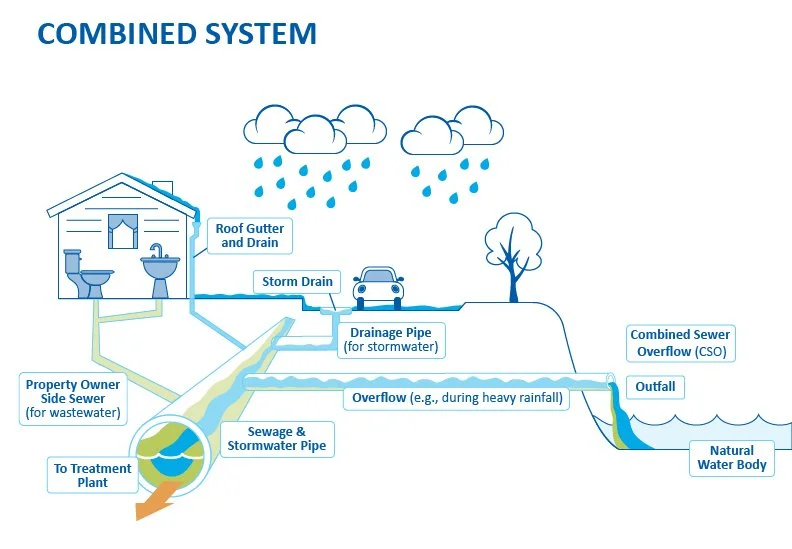
Combined sewer systems are the oldest type in Seattle, with infrastructure ranging from about 70 to 100 years in age. Combined sewers convey wastewater from the sinks, showers, toilets, washing machines and dishwashers of households and businesses, combined with stormwater that runs off of rooftops, lawns, streets, parking lots, and sidewalks.
Wastewater and stormwater travel together to treatment plants through the same sewer pipe. When too much water enters the pipes the system overflows into waterbodies, in an event called a combined sewer overflow (CSO).
The infographic visual on this page shows a depiction of a combined sewer system below a residential home. As rain falls from the sky and into the roof gutter and drain, the runoff travels into a storm drain above ground, reaching a drainage pipe below ground. Below the home, wastewater from toilets and sinks travels through the property owner’s side sewer pipe to a combined sewage and stormwater pipe headed for a treatment plant. During heavy rain an overflow pipe takes an untreated mix of combined sewage and stormwater to an outfall pipe, creating a combined sewer overflow into a natural water body like the ocean.
Separated sewer system
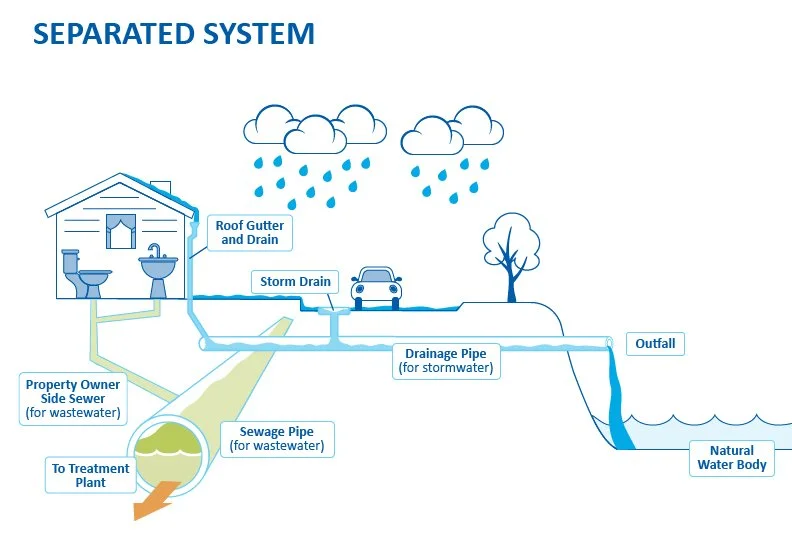
In separated sewer systems, sewer pipes convey wastewater from homes and businesses to treatment plants. Different, separated pipes carry stormwater to drainage outlets.
In separated sewer systems, sanitary sewers convey wastewater from homes and businesses to treatment plants in different pipes than those that carry stormwater to drainage outlets. Approximately 27% of Seattle’s wastewater system is separated (mostly in the north end).
This infographic shows how a separated sewer system works under a home. Rainwater flows from the roof into gutters and storm drains, then travels through a pipe that carries stormwater directly to a nearby water body, such as a river or the ocean. Wastewater from sinks and toilets flows through a separate pipe to a treatment plant, where it is cleaned before being released.
Partially separated sewer system
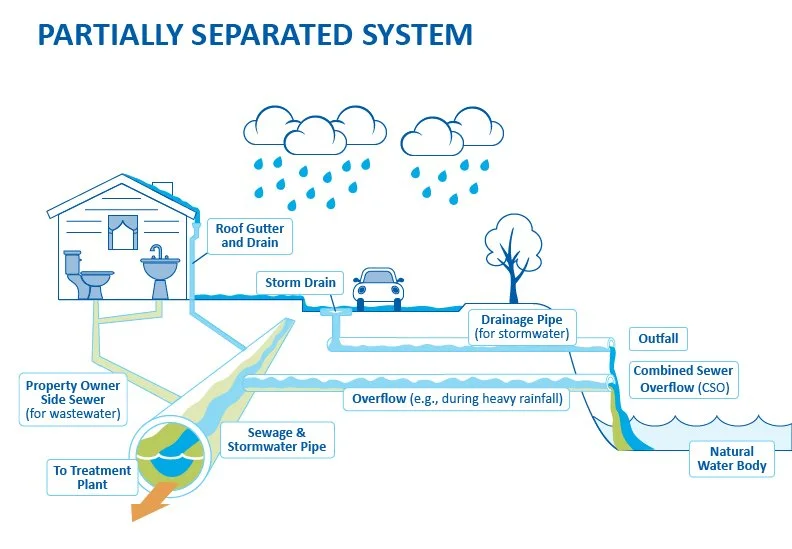
Partially separated sewers convey wastewater and stormwater from roof gutters and downspouts to treatment plants; all other stormwater is conveyed in separate drainage pipes.
Partially separated sewers convey wastewater from inside homes and businesses, and stormwater from roof gutters and downspouts and send these waters to treatment plants. All other stormwater (from places like storm drains) is conveyed in separate drainage pipes.
40% of Seattle’s sewer system is partially separated (primarily throughout the southern parts of the city, and in several northern basins).
This infographic shows how a partially separated sewer system works under a home. Rainwater flows from the roof into gutters and storm drains, while wastewater from sinks and toilets flows through a separate sewer pipe. Most of the time, wastewater is sent to a treatment plant. During heavy rain, however, some stormwater and wastewater can mix and overflow through a pipe that releases untreated water into a nearby water body.